

PRODUCT DISPLAY
Product Display
Current Location: Home - Product Showcase
Product Display
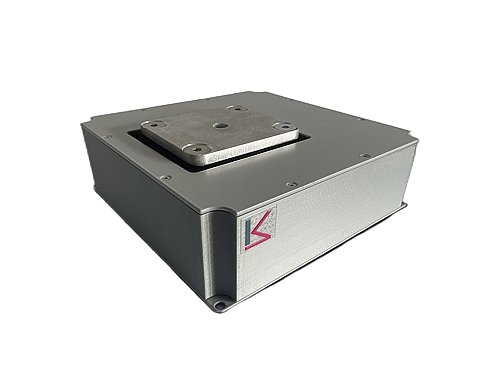
 Active Vibration Isolation PlatformActive vibration isolation is when the sensor detects the vibration pressure signal and converts it into an electrical signal, which is transmitted to the actuator, and the actuator outputs a force in the opposite direction to cancel the vibration. Active vibration isolation can reduce both low-frequency and high-frequency vibrations, especially for the low-frequency range, where its isolation effect is far better than passive vibration isolation. Passive vibration isolation uses elastic materials such as springs, air cushions, rubber, etc., to reduce vibration through their physical properties, capable of lowering vibrations above 20Hz, but with limited effect on low-frequency vibrations. With the increasingly stringent standards for precision experiments, experimental results are greatly affected by environmental factors, particularly by external vibrations, which significantly impact the accuracy of the results. The active vibration isolation experimental platform serves as an excellent vibration reduction device, absorbing vibration waves within a certain frequency range or reducing vibration frequencies through the superposition of wave peaks and troughs to achieve vibration reduction.
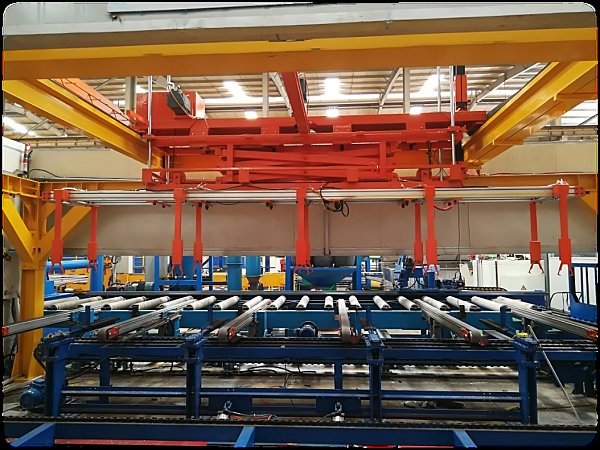
 Aluminum Profile Intelligent Loading and Unloading RobotThe aluminum profile intelligent loading and unloading robot primarily serves as a
carrier for transferring and storing profiles, handling their placement and retrieval.
It performs tasks such as unloading profiles from production lines, packing,
transferring, and loading them. This product significantly reduces labor intensity
and inefficiencies, promotes industrial transformation and upgrading, and lowers
costs. Its key technologies are based on aerospace- and military-grade integrated
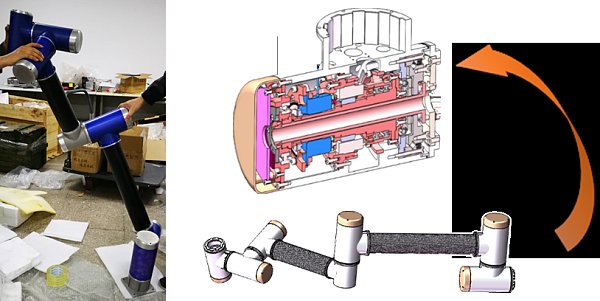
solutions, ensuring high quality and reliable performance. High-precision robotic arm joint featuring active compliance sensingIntegrated robotic arm joint combines core components including torque motor, incremental encoder, absolute encoder, electromagnetic brake, torque sensor, and drive control board into a compact unit. The streamlined mechanical design enables intelligent servo drive for smooth and compliant joint control.
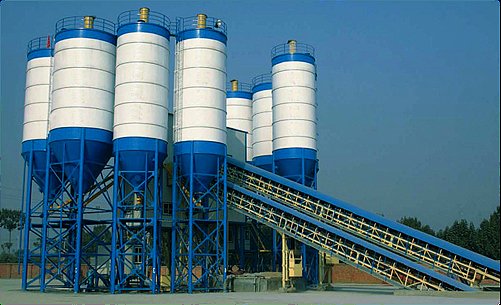
 Concrete Mixing Station Control SystemThe Concrete Mixing Station Control System leverages advanced automation and networking technologies to innovatively control and manage the entire concrete production process, including material storage, batching, feeding, and mixing. It ensures secure concrete production while comprehensively enhancing the efficiency and management standards of centralized production. This integrated, open-system product combines concrete production control and management in one, featuring a streamlined and intuitive interface that facilitates learning and reduces resource waste.
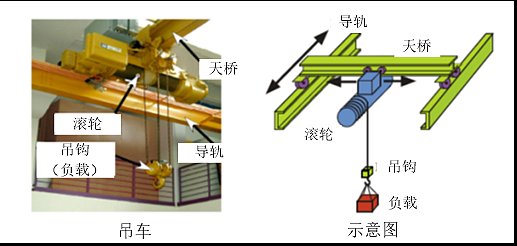
 Advanced Stability Controller for Crane Swing SuppressionThe crane is a crucial lifting and transportation machinery widely used in factories, construction sites, and docks to transport heavy loads, significantly saving manpower and playing a vital role in the development of human society. However, most cranes currently still rely on manual operation. Due to the crane system being underactuated, multi-input multi-output, uncertain, and strongly coupled nonlinear, the crane's movement during load transportation often results in unavoidable swinging. This not only limits the efficiency improvement of the crane system but also poses safety risks to ground personnel. Implementing automatic swing suppression for cranes will greatly enhance work efficiency, ensure production safety, and save human resources. For practical engineering applications, complex control algorithms are abandoned, and input shaping technology is adopted to achieve crane system swing suppression, making the algorithm simple, convenient, and effective.

{item.title}
{item.description}
Search from here