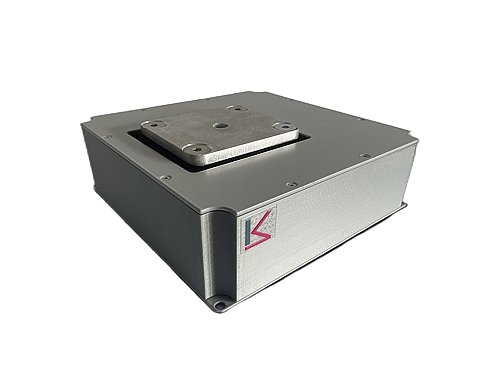
Active vibration isolation is when the sensor detects the vibration pressure signal and converts it into an electrical signal, which is transmitted to the actuator, and the actuator outputs a force in the opposite direction to cancel the vibration. Active vibration isolation can reduce both low-frequency and high-frequency vibrations, especially for the low-frequency range, where its isolation effect is far better than passive vibration isolation. Passive vibration isolation uses elastic materials such as springs, air cushions, rubber, etc., to reduce vibration through their physical properties, capable of lowering vibrations above 20Hz, but with limited effect on low-frequency vibrations. With the increasingly stringent standards for precision experiments, experimental results are greatly affected by environmental factors, particularly by external vibrations, which significantly impact the accuracy of the results. The active vibration isolation experimental platform serves as an excellent vibration reduction device, absorbing vibration waves within a certain frequency range or reducing vibration frequencies through the superposition of wave peaks and troughs to achieve vibration reduction.